Political SMS Marketing: A Practical Guide for Campaign Messaging
Political SMS marketing is the use of compliant text messaging (broadcast and peer-to-peer) to communicate with voters, donors, and volunteers. Campaigns use SMS platforms like SlickText to fundraise, mobilize turnout (GOTV), recruit volunteers, conduct surveys, and manage voter conversations at scale.
With high open rates, immediate delivery, and mobile-first engagement, text messaging enables campaigns to mobilize supporters, drive donations, coordinate volunteers, and increase voter turnout.
This guide walks through how political SMS works, the best political text messaging services, examples of political campaign texts, compliance requirements, and best practices for launching and scaling a successful program.
What Is Political Text Messaging?
Political text messaging is a direct-to-voter communication strategy that uses SMS and MMS marketing to reach supporters, donors, and undecided voters on their mobile devices.
There are two primary formats:
Broadcast SMS
Broadcast SMS sends one message to a large audience at once. It’s commonly used for:
- Fundraising appeals
- Event reminders
- GOTV (Get Out The Vote) pushes
- Announcements
Peer-to-Peer (P2P) Texting
Peer-to-peer texting enables volunteers or staff to send individualized messages and manage one-on-one conversations at scale. This format is often used for:
- Voter persuasion
- Volunteer recruitment
- 1-on-1 surveys
- Follow-up conversations
Standard SMS messages are limited to 160 characters and text-only. MMS allows images, GIFs, and video, which can increase engagement but may cost more per send.
Modern political texting platforms support segmentation, automation, compliance management, link tracking, and reporting.
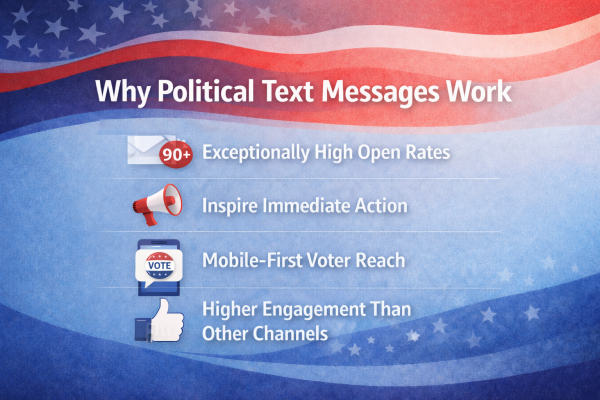
Why Political Text Messages Work
1. Exceptionally High Open Rates
SMS open rates regularly exceed 90%, far higher than email. Most text messages are read within minutes of delivery.
2. Immediate Action
Texts are delivered almost instantly, allowing campaigns to drive rapid responses for donations, event RSVPs, volunteer shifts, or urgent updates.
3. Mobile-First Voter Reach
Younger and mobile-first voters rely heavily on text messaging. SMS meets voters where they already spend time—on their phones.
4. Higher Engagement Than Other Channels
Compared to emails, cold calls, or door knocks, voters are often more responsive to text messages—especially when messages are personalized and relevant.
5. Cost-Effective Outreach
Depending on the political SMS service you select, sending political text messages can be very cost-effective, allowing you to achieve the results you want without overpaying.
Defining Your Political SMS Marketing Strategy
Before launching a program, campaigns should clearly define campaign goals, target audiences, ownership, and coordination with other messaging channels.
Campaign Goals
Common SMS goals include:
- Increasing voter turnout
- Driving online donations
- Mobilizing volunteers
- Promoting early voting
- Conducting surveys
Target Audiences
Segment audiences using:
- Voting history
- Geography
- Turnout likelihood
- Donor history
- Issue alignment
Targeted messaging increases relevance, response rates, and overall effectiveness.
Ownership and Coordination
Assign clear internal ownership for:
- Compliance management
- Messaging approvals
- Reporting and analytics
SMS should align with your broader campaign communications calendar to ensure message consistency across channels.
Key Use Cases for Political Texting
Fundraising
SMS is one of the most effective digital fundraising channels.
Best practices:
- Use one clear call to action (CTA).
- Personalize donation asks based on past giving.
- Include a direct donation link in every message.
- Keep messages concise and urgent.
Well-executed SMS fundraising programs have reported significant ROI compared to other digital channels.
GOTV (Get Out The Vote)
Political SMS is particularly powerful for turnout efforts.
Common GOTV uses:
- Election Day reminders
- Early voting promotion
- Polling place and hours information
- Ride-to-the-polls coordination
- RSVP prompts for events
Text messaging has been associated with measurable increases in turnout, particularly among lower-propensity voters.
Volunteer Coordination and Retention
SMS simplifies volunteer management by enabling volunteer coordinators to:
- Confirm shifts
- Send reminders
- Provide event details
- Send post-event thank-yous
- Collect availability via reply
Two-way texting improves retention by maintaining consistent communication.
Surveys and Persuasion Research
Political campaign managers use SMS to gather real-time voter feedback.
Tactics include:
- Single-question polls
- Issue prioritization surveys
- Data collection synced to voter files
- Routing engaged respondents to P2P follow-up
The best political texting tools allow you to segment campaigns based on survey responses, making sure your campaign content focuses on issues that matter to voters.
How to Choose a Political Texting Service
When searching for a campaign texting service, campaign managers should:
- Confirm support for both broadcast and peer-to-peer texting
- Compare delivery reliability and reporting capabilities
- Review segmentation and automation features
- Ensure link tracking for donations and events
- Complete required 10DLC registration for U.S. long-code messaging
Platform choice affects deliverability, compliance, reporting accuracy, and your ability to scale effectively.
Top 5 Political Text Messaging Services (2026)
Below is a comparison of five leading political texting platforms used by campaigns and organizations in 2026.
| Platform | Broadcast SMS | Peer-to-Peer (P2P) | Best For | Notes |
| SlickText | ✔️ | ✔️ | Broadcast texting and peer-to-peer texting for Republicans, Democrats, Third Party, and Independent Campaigns | Enterprise texting solution, including bulk texting and two-way texting, for political candidates in 2026. |
| Impactive | ✔️ | ✔️ | Texting and phone banking for Democratic candidates | Political organizing platform for texting and phone banking for democrats. |
| RumbleUp | ❌ | ✔️ | Large-scale P2P outreach | Dedicated peer-to-peer texting tool designed for voter contact and advocacy engagement. |
| GetThru | ❌ | ✔️ | Conversational organizing | P2P platform built for modern political organizing and volunteer-driven voter conversations. |
| Hustle | ❌ | ✔️ | Scalable P2P programs | Widely used peer-to-peer texting platform for campaigns and nonprofits. |
How Political Campaign Texting Services Differ
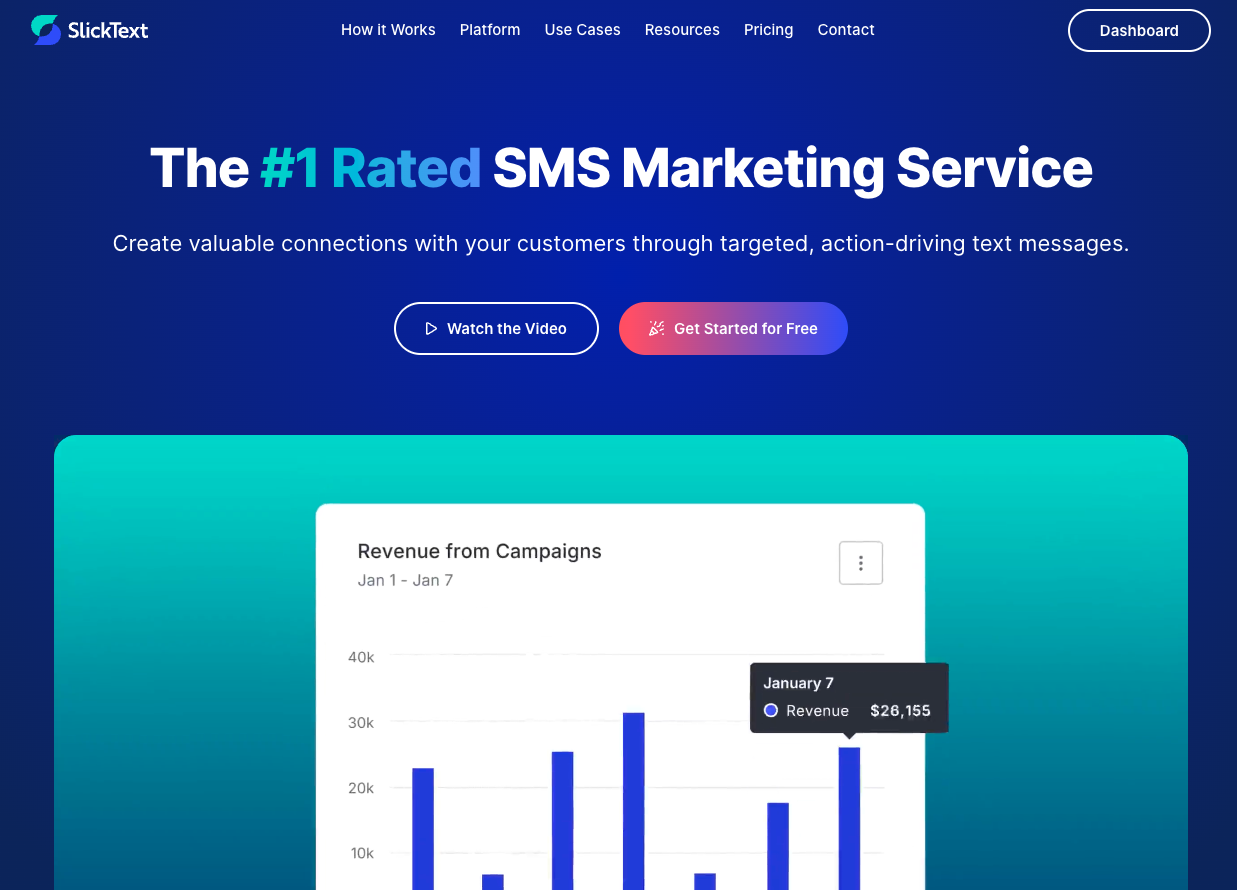
SlickText supports both broadcast SMS and peer-to-peer texting. Campaign managers can send mass text messages to audiences who have opted in while also managing one-on-one voter conversations with voter lists. The platform allows unlimited users, automatically assigns incoming messages to the right responder, and keeps conversations organized with tags and statuses — making it ideal for teams that need both scale and organization.
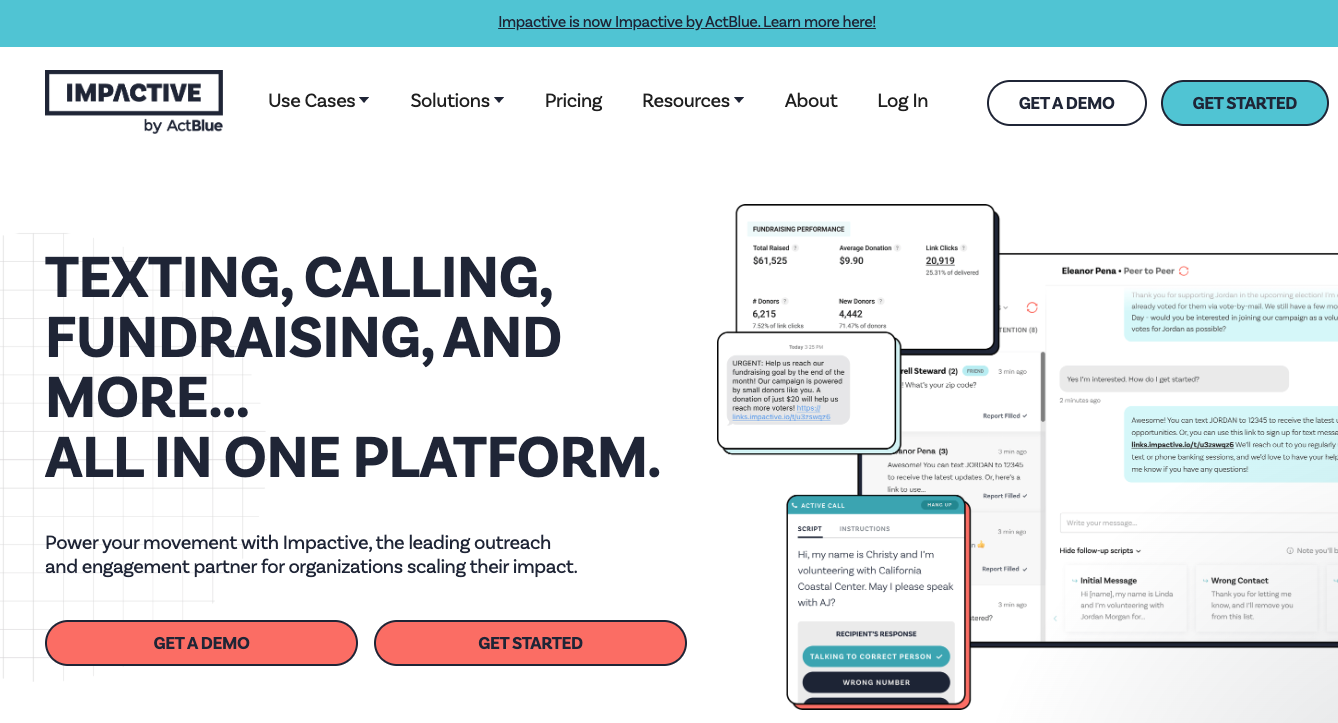
Impactive combines broadcast and P2P texting within a broader digital organizing ecosystem. Impactive was purchased by ActBlue in 2025. ActBlue is a fundraising platform and registered political action committee (PAC) designed for Democratic candidates, progressive organizations, and non-profits.
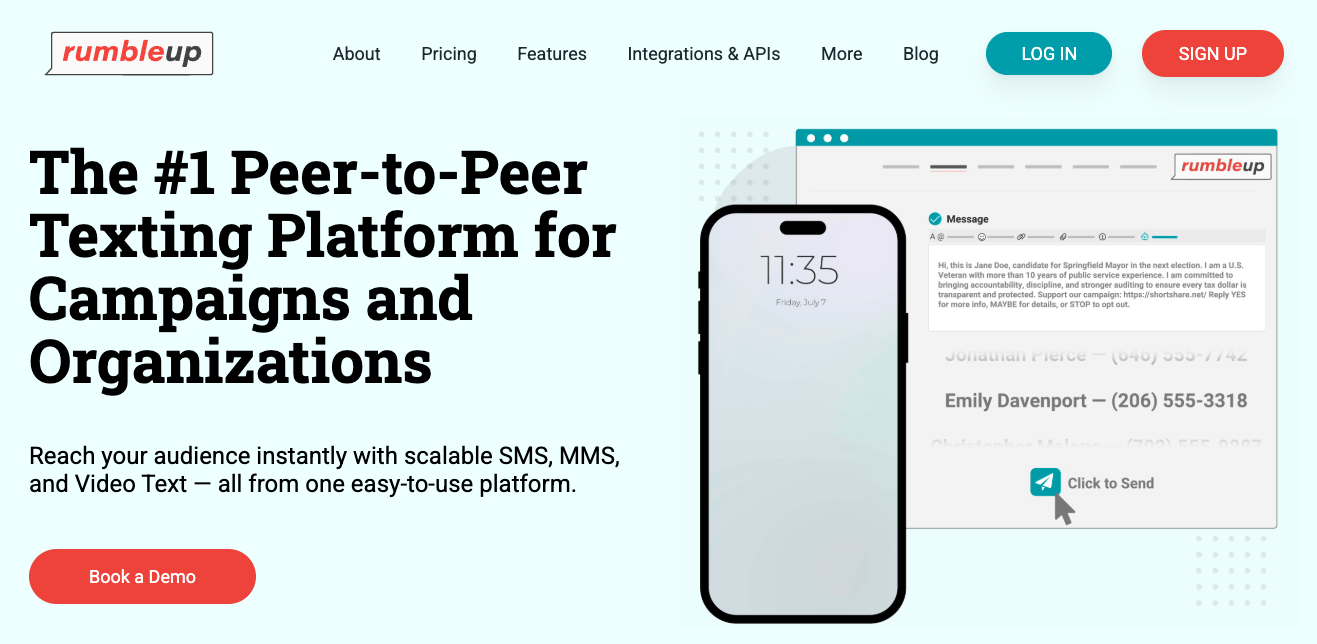
RumbleUp, GetThru, and Hustle specialize in peer-to-peer texting, focusing on volunteer-driven conversations, persuasion, and relational outreach rather than traditional broadcast-style mass SMS.
Compliance, Consent, and Regulations for Political SMS Marketing
Campaign Verify
Every political campaign must be registered with Campaign Verify. Campaign Verify’s mission is to “provide a public service on a non-partisan basis to verify the integrity and authenticity of text message and other communications related to political campaigns and elections in order to educate the public, ensure public confidence in American elections, and protect political and civic rights in the election system.” Follow the four steps below to get approved for sending compliant political text messages.
Step 1: Register with Campaign Verify
Go to Campaign Verify and begin the verification process.
You will need to provide your campaign’s official filing information, such as:
- Federal Election Commission (FEC) ID or
- State or local election filing records
Cost: Campaign Verify charges $95 for this process.
Step 2: Verify Your Campaign Details
Complete the Campaign Verify form carefully.
Important:
- All information must exactly match your official election filing
- Any mismatch can delay approval
Campaign Verify will review your submission. This step may take some time.
Step 3: Receive Your Secure PIN
Once approved:
- Campaign Verify will send a secure six-digit PIN
- It will be delivered to the email address or phone number listed on your official filing
- Follow their instructions to complete verification
After completion, you will receive your Campaign Verify Token.
Step 4: Contact SlickText Support
After you receive your token:
- Reach out to SlickText Support
- Provide your Campaign Verify Token
- Tell support which sending method you want:
- 10DLC local number (recommended for most campaigns)
- Toll-free number
SlickText will use your token to properly register your texting number for political messaging.
Why Proper Political Registration Matters
Not registering your campaign as political can cause serious problems:
- Message Blocking – Carriers actively filter unregistered political traffic. Your texts may fail to deliver.
- Carrier Violations – Sending political content without proper registration can violate carrier rules.
- Number Suspension – Your texting number—or even your account—could be suspended.
- Compliance Risk – Political messaging has stricter transparency requirements than standard business texting.
Proper Campaign Verify registration protects your deliverability, compliance, and campaign reputation. If you have questions during the process, contact SlickText Support and provide your Campaign Verify Token so the team can assist with registration.
10DLC Registration
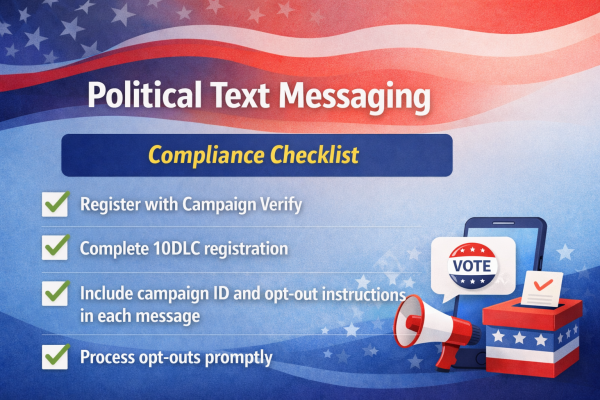
All U.S. political long-code messaging requires 10DLC registration to improve carrier trust and deliverability. You can complete this registration through your political texting platform.
Required Message Elements
Every political text must:
- Clearly identify the campaign or organization
- Provide opt-out instructions (e.g., “Reply STOP to opt out”)
Opt-Out Management
Campaigns must process opt-outs promptly and maintain updated suppression lists. SlickText’s political texting service includes intelligent opt-out management to help you automatically remove people who send obscene language, saving your budget and giving your volunteers more peace of mind.
Compliance protects not only against fines but also against carrier filtering and blocked messages. For more information, read the complete SMS compliance guide.
Best Practices for Political Texting
- Write one clear CTA per message.
- Keep messages under 160 characters when possible.
- Personalize with merge fields (first name, city).
- A/B test wording to improve response rates.
- Schedule messages in recipients’ local time zones.
- Monitor opt-out trends to avoid fatigue.
Example:
“Hi [First Name], as a resident of [City], your voice matters. Can we count on you at Saturday’s rally? Reply YES to RSVP. Reply STOP to opt out.”
Measuring Success of Political Campaign Text Messages
Track performance across:
- Reply rates
- Click-through rates
- Donation conversions
- Unsubscribes
Attribution should connect political sms marketing campaigns directly to fundraising and turnout outcomes.
How to Launch Political SMS Marketing
- Register your political campaign with Campaign Verify.
- Choose a compliant political campaign texting service.
- Register your 10DLC number with the carriers.
- Import and clean contact lists, making sure you only send mass texts to subscribers who opted in compliantly.
- Add volunteers or team members who will be sending peer-to-peer texts to the platform.
- Create reusable templates for volunteers to use in outreach.
- Start sending peer-to-peer text messages.
- Schedule your first broadcast texting campaign to subscribers who opted in compliantly.
- Analyze and scale strategically.
Political Text Messages Examples
GOTV Reminder
“Hi [First Name], this is [Campaign Name]. Election Day is tomorrow. Polls are open 7am–8pm. Make your voice heard. Reply STOP to opt out.”
Donation Ask
“Hi [First Name], [Campaign Name] needs your support to reach more voters. Can you chip in $10 today? Reply STOP to opt out.”
Volunteer Follow-Up
“Thank you, [First Name], for signing up to volunteer with [Campaign Name]. What’s your availability this week? Reply STOP to opt out.”
One-Question Survey
“Hi [First Name], what issue matters most to you this election? Reply with your answer. —[Campaign Name] Reply STOP to opt out.”
Troubleshooting and Optimization for Campaign Messaging
- Watch for spikes in opt-outs.
- Update outdated contact data.
- Refine scripts based on feedback.
- Adjust frequency to prevent fatigue.
Continuous testing and optimization are essential for long-term SMS success.
Final Thoughts
Political SMS marketing is one of the most direct and measurable communication channels available to campaigns and organizations. When paired with proper segmentation, compliance safeguards, and performance tracking, political text messaging can drive donations, increase turnout, mobilize volunteers, and strengthen voter relationships.
Campaigns that treat SMS as a strategic program—not just a one-off tool—are best positioned to maximize impact.
Frequently Asked Questions About Political Text Messaging Services
What is political text messaging?
Political text messaging is a direct-to-voter communication strategy that uses SMS (Short Message Service) and MMS (Multimedia Messaging Service) to reach supporters, donors, and undecided voters on their mobile devices. Campaigns use it to fundraise, mobilize voters (GOTV), recruit and coordinate volunteers, conduct surveys, and manage voter conversations at scale.
What is the difference between broadcast SMS and peer-to-peer (P2P) texting?
Broadcast SMS sends one message to a large audience simultaneously. It is best for fundraising appeals, event reminders, GOTV pushes, and announcements.
Peer-to-peer (P2P) texting enables volunteers or staff to send individualized messages and manage one-on-one conversations at scale. It is best for voter persuasion, volunteer recruitment, survey outreach, and follow-up conversations.
What is GOTV texting?
GOTV stands for Get Out The Vote. GOTV texting refers to SMS campaigns designed to increase voter turnout. Common uses include Election Day reminders, early voting promotion, polling place and hours information, ride-to-the-polls coordination, and event RSVP prompts. Text messaging has been associated with measurable increases in turnout, particularly among lower-propensity voters.
What are the best political text messaging services for campaigns in 2026?
The top political text messaging platforms in 2026 are:
- SlickText — Supports both broadcast SMS and peer-to-peer texting, making it a full solution for Republican, Democratic, Third Party, and Independent campaigns. Features include unlimited users, auto-assignment of incoming messages, and conversation management with tags and statuses.
- Impactive — Combines broadcast and P2P texting within a broader digital organizing platform. Acquired by ActBlue in 2025, it is designed for Democratic candidates, progressive organizations, and nonprofits.
- RumbleUp — A dedicated peer-to-peer texting tool designed for large-scale voter contact and advocacy engagement. It’s open to all campaigns but has deep roots with Republican organizations.
- GetThru — A P2P platform built for conversational organizing and volunteer-driven voter conversations.
- Hustle — A widely used peer-to-peer texting platform for campaigns and nonprofits focused on scalable P2P programs.
SlickText and Impactive support both broadcast and peer-to-peer texting natively. RumbleUp, GetThru, and Hustle specialize exclusively in peer-to-peer texting.
What is 10DLC registration and do I need it for political texting?
10DLC (10-Digit Long Code) is the carrier-mandated registration process for organizations in the U.S. that send SMS using standard 10-digit phone numbers. For political campaigns, this includes both broadcast messages and peer-to-peer outreach.
Registering your campaign and messaging use case with mobile carriers increases transparency and legitimacy. In return, carriers provide better throughput, improved deliverability, and a lower likelihood that messages will be filtered or blocked.
If your campaign plans to send text messages at scale from a local 10-digit number, 10DLC registration isn’t optional—it’s required before you begin sending.
What compliance rules apply to political text messaging?
Political SMS in the United States is regulated by the CTIA (Cellular Telecommunications Industry Association) and Campaign Verify, a nonpartisan organization that exists to ensure public confidence in American elections.
Key compliance requirements include:
- Registering your campaign with Campaign Verify
- Completing 10DLC registration for all long-code messaging
- Clearly identifying the campaign or organization in every message
- Including opt-out instructions in every message (e.g., “Reply STOP to opt out”)
- Processing opt-outs promptly and maintaining updated suppression lists
Failure to comply can result in fines, carrier filtering, and blocked messages.
How much does political text messaging cost?
Costs vary by platform, message volume, and features. Most platforms price per message or via monthly plans. MMS messages — which support images, GIFs, and video — typically cost more per send than plain SMS. When implemented strategically, political SMS is considered one of the most cost-effective digital outreach channels available to campaigns.
What features should I look for in a political texting platform?
Key features to evaluate include:
- Support for both broadcast SMS and peer-to-peer texting
- Segmentation capabilities by geography, vote history, turnout likelihood, and donor history
- Merge fields for message personalization (e.g., first name, city)
- Link tracking for donations and event RSVPs
- Real-time engagement analytics
- Automated opt-out processing
- 10DLC registration support
- Shared inbox and auto-assignment for team-based P2P programs
- Unlimited user seats for volunteer-driven programs
Why do political campaigns use text messaging instead of email or phone calls?
SMS open rates regularly exceed 90%, far higher than email, and most messages are read within minutes of delivery. Texts are delivered almost instantly, enabling campaigns to drive rapid responses for donations, RSVPs, or urgent updates. Compared to emails, cold calls, or door knocks, voters are often more responsive to text messages — especially when messages are personalized and relevant. SMS is also particularly effective for reaching younger and mobile-first voters.
What are examples of effective political campaign text messages?
GOTV Reminder: “Hi [First Name], this is [Campaign Name]. Election Day is tomorrow. Polls are open 7am–8pm. Make your voice heard. Reply STOP to opt out.”
Donation Ask: “Hi [First Name], [Campaign Name] needs your support to reach more voters. Can you chip in $10 today? [Link] Reply STOP to opt out.”
Volunteer Follow-Up: “Thank you, [First Name], for signing up to volunteer with [Campaign Name]. What’s your availability this week? Reply STOP to opt out.”
One-Question Survey: “Hi [First Name], what issue matters most to you this election? Reply with your answer. —[Campaign Name] Reply STOP to opt out.”
How do I measure the success of a political SMS campaign?
Key metrics to track include reply rates, click-through rates on donation or event links, donation conversion rates, and unsubscribe rates. Attribution should connect SMS campaigns directly to fundraising totals and turnout outcomes to measure true ROI.
Can I scale my political texting program up or down during a campaign?
Yes. Most platforms support flexible scaling, allowing campaigns to surge messaging volume during high-stakes moments like early voting periods and Election Day, then reduce cadence after those windows close. A phased rollout — starting with a small test send before scaling — is recommended to reduce risk and identify deliverability or messaging issues before a high-stakes send.
How do I get started with political text messaging?
The recommended steps are:
- Register your political campaign with Campaign Verify.
- Choose a compliant political campaign texting service.
- Register your 10DLC number with the carriers.
- Import and clean contact lists, making sure you only send mass texts to subscribers who opted in compliantly.
- Add volunteers or team members who will be sending peer-to-peer texts to the platform.
- Create reusable templates for volunteers to use in outreach.
- Start sending peer-to-peer text messages.
- Schedule your first broadcast texting campaign to subscribers who opted in compliantly.
- Analyze and scale strategically.