How to Use Location Based SMS Marketing (Examples Included)

Updated May 4, 2026
Location, location, location isn’t just a saying in real estate.
Businesses have long been searching for ways to segment their communications so that only people who are nearby receive their marketing. You’ve probably heard the buzzword: location-based advertising.
Not quite sure what location-based advertising is or how you’d make it work for you? Here’s everything you need to know about this savvy marketing technique, including simple strategies for implementing location-based advertising into your marketing mix right now — especially as it relates to mass texting and location based marketing campaigns.
Location-Based SMS marketing: Key Takeaways
- Location-based SMS marketing uses customer location data to send more relevant text messages.
- Businesses can segment by ZIP code, city, area code, textword, form response, or customer-provided location.
- Geofencing can trigger messages when opted-in users enter, exit, or remain inside a defined location.
- Location-based campaigns work best when they are timely, consent-based, and useful.
- Area codes can help with broad targeting, but they are less reliable than customer-provided location data.
What is Location-Based Advertising?
Location-based advertising is a form of marketing that leverages location data to deliver targeted and personalized messages to customers based on their physical location. By using geolocation technology, businesses can identify where users are and serve relevant content accordingly. For instance, a retail store might send a special discount offer to customers who are nearby, encouraging them to visit the store and make a purchase.
How does location-based advertising work?
Location-based advertising (LBA) is a strategy for marketing that combines mobile ads with location tracking to show consumers content relevant to their physical location. For example, if you’re walking by a coffee shop, you might receive an ad on your phone with its daily specials. This is location-based advertising at work.
Location-based advertising doesn’t have to be that direct. It can also involve sending ads based on a customer’s general geographic area, such as by zip code or area code. For example, if you run a business with multiple locations, you might want to only target customers with promotional texts who are near Location A with a certain promotion. Location-based advertising lets you do this.
Why use location-based advertising?
Simply put: A lot of people own smartphones. In fact, SMS statistics show 7.4 billion people worldwide now use smartphones. Traditional advertising channels worked when people watched T.V. or listened to radios — nowadays, people check their smartphones constantly. You need to meet them where they are and serve valuable content. When location-based advertising is done right, it’s hyper-valuable because it’s deeply contextualized to a person’s unique experience. Implementing a location based marketing strategy can significantly enhance your marketing efforts by leveraging geofencing to drive higher conversion rates and increase foot traffic for brick-and-mortar stores.
Is location-based marketing effective?
Statistics show more than eight out of ten marketers (84%) are using location-based marketing in some way. The majority of these marketers (52%) are using location-based mobile marketing and advertising to personalize their customer experience and create hyper-engaged audiences. When used as part of a broader SMS marketing strategy, it can help brands send timely, useful texts instead of generic promotions.
MarTech data shows 83% of marketers feel their business text messaging campaigns are more effective with location-based advertising. The same amount see higher response rates when they use location-based advertising. Also, 74% of marketers see an improved return on investment, and 70% see an increased lift.
Strategies for location-based advertising with SMS
Location-based mobile advertising is most easily accomplished using text marketing and it’s surprisingly simple to set up. Here are four ways you can get started.
Example 1: Use your web sign-up form
If you’re using a web sign-up form to obtain consent, you can easily add fields to help segment your list by location, then market to those locations using location-based services.
These fields could be state, city, or even zip code. Not everyone uses a web form for consent, so this option won’t work all the time, but it’s very simple to create if a web form is part of your strategy.
After you’ve collected this information, it’s just a matter of segmenting your list based on location. You can choose to send marketing SMS messages to members of your text list who have a specific zip code or live in a certain city.
Example 2: Create a conversation in Workflows
Our Workflows feature allows ultra control over how niche you can get with your location-based advertising. It’s easy to create automated conversations that ask your customers questions. Our automated text message service can read customer sentiment and automatically funnel them into additional streams for you to further segment your audience by marketing locations, interests, and more.
For example, you could segment customers by where they work and where they live. While their zip code might provide valuable information about their location in the evenings or weekends, asking a question such as “Do you work downtown,” can help you send them relevant information during the work day. Enabling location services on their devices can further enhance this segmentation by providing real-time location tracking.
Example 3: Use textwords
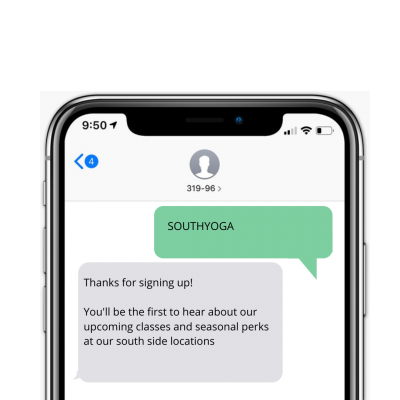
Think of textwords like keywords. They’re the word or phrase that people text in to join your text list. If you have more than one location for your business, you can consider creating location-specific text words. This would put people from each location on separate text lists.
For example, if you’re a yoga studio, you could tell customers on the south side of town to use one text word, like SOUTHYOGA, and you can tell customers on the north side of town to use another textword, such as NORTHYOGA. Repeat this for all of your locations. That way, customers who live nearby and are most likely to visit your studio will hear about deals or promotions specific to that studio, allowing you to market by location.
Example 4: Use area codes
Another option for location-based mobile advertising is to separate your list based on their phone number area code. Theoretically, everyone with a certain area code should be living in the same general area.
While this technically works, it’s not the best way to do location-based advertising. In fact, it’s somewhat rudimentary and prone to a lot of errors. People often move without changing their phone numbers, which makes this strategy unreliable.
The best use case for area codes to do location-based advertising is if you have a scenario where your location is very large — perhaps the entire state, or an entire region. Again, it’s probably best to use other data to segment your list, but this could be a good starting point if you only have access to area codes.
Crafting an Effective Location-Based SMS Campaign
Creating a successful location-based SMS campaign requires careful planning and execution. Here are some tips to help you craft effective campaigns:
- Define Your Goals: Clearly define your objectives before launching a location-based SMS campaign. Are you aiming to drive foot traffic to your store, promote a specific product or service, or increase customer engagement? Setting clear goals will guide your strategy.
- Identify Your Target Audience: Understand your target audience’s behavior and preferences. Identify key demographics such as age, gender, and interests to tailor your messages effectively.
- Choose the Right Geofences: Selecting the right geofences is crucial for reaching your target audience. Consider locations frequented by your audience, such as shopping malls, restaurants, or event venues, to maximize the impact of your messages.
- Craft Compelling Messages: The success of your location-based SMS campaign depends on the quality of your messages. Craft compelling messages that grab attention, provide value, and include a clear call to action. For example, a message offering a limited-time discount can prompt immediate action.
- Timing is Key: Timing plays a crucial role in the success of your campaign. Send messages at times when your target audience is most likely to be near your geofence. A lunchtime offer sent to office workers can drive more foot traffic to nearby restaurants.
Should you start location-based mobile advertising?
Location-based advertising is becoming increasingly popular. Statistics show that nine out of ten marketers believe location-based advertising grew their sales. The same study found 86% of marketers think location-based mobile advertising fueled growth in their customer base.
Customers are looking for a more personal experience. They want to block out the noise and only receive messaging that is hyper-relevant to them. That’s what location-based advertising can do. At the same time, there are some drawbacks. Follow best practices to make sure you’re using location-based advertising right.
Pros
- Relevant ads: You’re adding value to customers by showing them ads that matter or have great relevance to their immediate circumstances.
- Build customer engagement: You’re more likely to develop brand enthusiasts when you’re sending them information they can actually use in the moment.
- Increase sales: Location-based advertising done right can help you grow revenue.
- Easy to start: Using SMS or MMS to start location-based mobile advertising takes only minutes to set up.
- You can talk to anyone with a phone: Some versions of mobile ads can only be sent to smartphone users, but if you do location-based advertising via SMS you can access anyone with a mobile phone.
Cons
- Needs to be specific: If you don’t have the right information to start segmenting your list, you’ll need to begin collecting more data by asking questions and soliciting responses from your current text list.
- Ineffective data: If your data is outdated or simply not relevant to your business, then location-based advertising will have a diminished impact.
- Could feel uncomfortable: Some consumers are uncomfortable when they feel hyper-targeted. Location-based SMS marketing should always be permission-based. Customers should understand what they’re signing up for, how their information may be used, and how to opt out. Keep location targeting helpful—not creepy—by using data customers provided directly or consented to share.
Frequently Asked Questions About Location-Based Advertising
Still have lingering questions about location-based marketing? Great, we’ve got answers.
How do you do location-based advertising?
There are many different strategies for location-based advertising using both digital and physical method. Usually, location-based advertising means taking specific consumer data and using that to send mobile messages or ads based on where a customer currently is.
What is location-based SMS marketing?
Location-based SMS marketing is the practice of sending text messages to subscribers based on location details such as city, ZIP code, area code, store location, event attendance, or geofenced proximity.
How can advertisers use location data?
Advertisers use data from mobile phones like IP addresses, GPS signals, and cellular data, or data previously provided by the consumer.
How is location data used?
Location data helps marketers understand what ads might be relevant to a consumer, and at what time. It helps show consumers more valuable, actionable advertisements.
How do advertisers know my location?
Using your area code, the keyword you sent, or by tracking information you’ve provided about your preferences, advertisers can determine your location.
What is SMS geofencing?
SMS geofencing is a location-based messaging strategy that sends texts to opted-in subscribers when they enter, exit, or stay within a defined geographic area. A business might create a geofence around a store, event venue, campus, restaurant district, or competitor location to send timely messages based on where customers are.
How does geofencing work in SMS marketing?
Geofencing uses a virtual boundary around a real-world location. When an opted-in customer enters, exits, or stays within that area, a business can send a relevant text message, such as a local offer, reminder, or event update.
Use SMS for Location-Based Advertising & Marketing
Ready to implement location-based advertising into your marketing strategy? Try it for free today on our website.